Dealing with commercial rent arrears can create significant stress and financial strain for commercial property owners and managers. The process to recover unpaid commercial rent often appears complex, creating administrative burdens and impacting professional relationships. This guide provides a clear path to understanding and using Commercial Rent Arrears Recovery (CRAR). By partnering with an ethical specialist like Equivo, you can transform a challenging situation into a manageable one, ensuring rent is recovered with professionalism.
Understanding Commercial Rent Arrears
Commercial rent arrears occur when a tenant fails to make a payment required under their commercial lease agreement. From the day payment is missed, the rent is officially in arrears and the property owner has a legal right to act.
The financial impact can be immediate. Missed rent payments can affect your ability to cover mortgages, service loans, or invest in property maintenance. Acting promptly and in accordance with the law is essential to protect your investment and support cash flow. Industry analysis has shown that rent collection rates can fall significantly in sectors like retail and hospitality, threatening landlord solvency and disrupting asset management strategies. This underscores the importance of having an effective, compliant process for recovering overdue rent.
Tenants may fall behind on rent for several reasons, including short-term business cash flow issues, unforeseen commercial challenges, or administrative oversights. Whatever the reason, landlords benefit from a structured approach that balances the need for resolution with professionalism.
Legal Options for Recovering Commercial Rent
When commercial rent arrears arise, landlords have several legal remedies available. Each option has distinct advantages and limitations and choosing the right one is critical.
Statutory Demands and Insolvency Proceedings
A statutory demand is a formal request for payment and a preliminary step toward insolvency proceedings like liquidation or bankruptcy. While it can prompt tenants to pay quickly, it is often a time-consuming and costly approach. If the tenant’s business is unable to pay, this process may lead to its closure, reducing the likelihood of recovering the full amount owed.
Court Proceedings and Solicitor Intervention
Landlords can issue a claim for unpaid rent through the courts or engage solicitors to send letters. Although this can result in a judgment, it is frequently a slow and expensive process. Enforcement of a judgment may also require further action, causing additional delays and expense.
Forfeiture of the Lease
This option enables a landlord to terminate the commercial lease agreement and regain possession of the premises. While forfeiture can be a powerful tool, it is also a service we offer that can complement or serve as an alternative to CRAR. For instance, if a tenant is no longer trading from the property, CRAR is not an option, but forfeiture may be the ideal solution. In such cases, we can also provide security and supervised access to the premises once forfeiture is complete.
Forfeiture can often be effected when the next rent period becomes due, sometimes within 24-48 hours depending on circumstances. Click here to learn more about our Commercial Lease Forfeiture service.

Commercial Rent Arrears Recovery (CRAR)
CRAR is a statutory procedure introduced under the Tribunals, Courts and Enforcement Act 2007. It gives commercial landlords a legal tool to recover overdue rent by taking control of a tenant’s goods. If necessary, these goods can be sold to cover the outstanding arrears.
What Is CRAR?
CRAR is a statutory procedure introduced under the Tribunals, Courts and Enforcement Act 2007 and the Taking Control of Goods Regulations 2013. It came into force in April 2014, replacing the previous common law remedy of Distress for Rent. CRAR gives commercial landlords a legal tool to recover unpaid rent by instructing a certificated enforcement agent to take control of a tenant’s goods, without the need to obtain a court judgment. If necessary, these goods can be sold to cover the outstanding arrears.
When Can CRAR Be Used?
CRAR can be applied only when specific conditions are met:
- There must be an existing written lease agreement. Without one, a landlord’s options are to obtain a court judgment for the arrears or pursue forfeiture.
- The lease should ideally state that the landlord has the right to use CRAR.
- The premises must be purely commercial (no residential element).
- The tenant must be actively trading from the premises specified in the lease. CRAR cannot be used at any other address or if the tenant has ceased trading.
- At least seven days’ rent must be overdue.
Only the principal rent is recoverable. However, VAT and interest can also be recovered if this is expressly stated as rent within the lease. Service charges, insurance and utilities cannot be recovered using CRAR.
The Role of Enforcement Agents
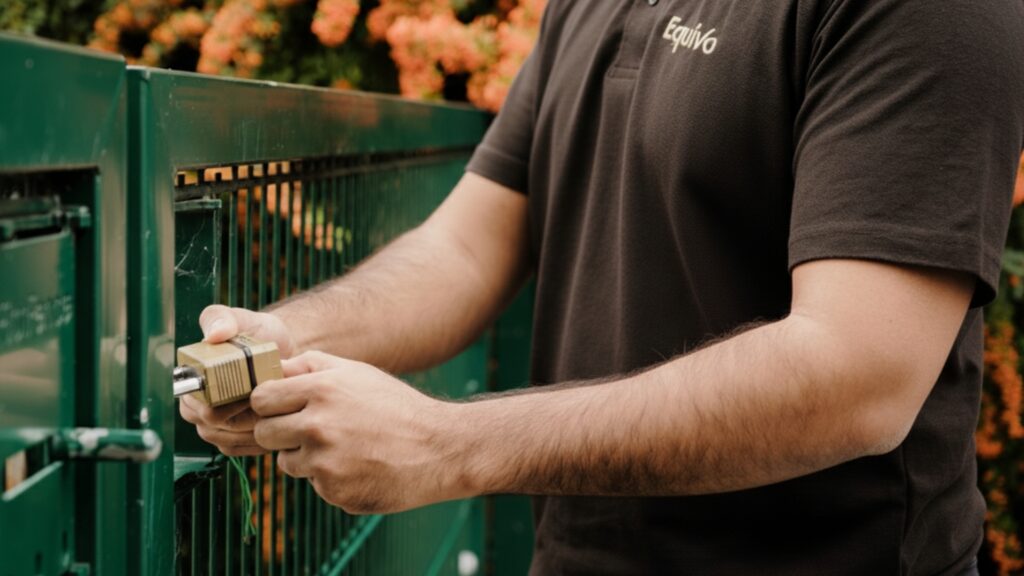
Only certified enforcement agents are permitted to carry out CRAR. At Equivo, our agents are authorised by the courts, operate under strict regulations and are trained to manage each case with professionalism and respect. We recognise that recovering arrears is sensitive; our approach is always tailored to deliver results firmly yet fairly. This ensures you recover unpaid commercial rent in a manner that upholds both legal obligations and professional relationships. Equivo’s agents adhere to the National Standards for Taking Control of Goods, guaranteeing transparency and accountability throughout the process.
How Equivo Recovers Rent Through CRAR
Our CRAR process is structured to resolve commercial rent arrears efficiently while supporting landlords and treating tenants with fairness.
Stage 1: The Compliance Stage
We begin by sending the tenant a formal Notice of Enforcement. This gives them seven clear days to pay the outstanding rent plus the charges permitted under the Taking Control of Goods Regulations 2013 and the Taking Control of Goods (Fees) Regulations 2014. This stage gives tenants an important opportunity to settle their arrears before further action is taken. The compliance stage fee is currently £79 + VAT. Should we be unsuccessful because the tenant is no longer trading, this is the only cost the landlord will incur.
Stage 2: Taking Control of Goods
If full payment is not received during the notice period, our certified enforcement agents visit the commercial premises. Our priority is to secure payment in full. If this is not possible, the agent seeks to take control of tenant goods under a Controlled Goods Agreement (CGA), which allows the tenant to continue using the assets while following a repayment plan. A comprehensive inventory of assets is prepared.
Stage 3: Removal and Sale of Goods
Should the tenant default on their repayment plan or fail to pay, our agents will revisit the premises to remove the controlled goods. We will notify you of this step in the process. These assets are then sold to recover the rent arrears, enforcement fees and third-party associated costs. This measure is only undertaken when necessary but ensures landlords can lawfully and effectively recover unpaid rent.
Why Landlords Choose Equivo
Selecting the right enforcement partner can make the difference between a prolonged challenge and an efficient resolution. At Equivo, we are committed to delivering more than just collections. We protect your interests through transparency, ethical service and an unwavering focus on results.
Key benefits of working with Equivo:
- Transparency and Integrity: Our agents use body-worn video and all activities are subject to rigorous quality checks, assuring fairness and compliance.
- Comprehensive Service: We manage the entire rent recovery process for you, reducing your administrative effort and supporting your objectives.
- Proven Expertise: Equivo has a strong track record of successfully recovering commercial rent arrears for property owners throughout the UK.
A Real-World Case: How Equivo Tackled CRAR
A commercial landlord in Manchester was faced with £25,000 in commercial rent arrears. Rather than pursuing lengthy court action, they used the CRAR process with Equivo. Upon service of the Notice of Enforcement, the tenant contacted us and a Controlled Goods Agreement was established within two weeks. As a result, the arrears were fully repaid over three months. This demonstrates how CRAR supports fast, structured and fair rent recovery.
Proactive management is essential to reducing the risk of future commercial rent arrears. Landlords can strengthen their position by:
- Conducting comprehensive financial due diligence on prospective tenants before finalising any commercial lease agreement.
- Clearly defining payment terms, due dates and the consequences of late payments within each lease.
- Engaging in regular, open communication with tenants to identify emerging challenges early and address concerns promptly.
By implementing these measures, you help protect your assets and maintain stable, long-term professional relationships.
Taking Control of Rent Recovery
If you are facing commercial rent arrears, effective solutions are within reach. Contact us or instruct Equivo today to assist with Commercial Rent Arrears Recovery and ensure your interests are protected every step of the way.
Your main contact:
Amber is a Senior High Court Enforcement professional at Equivo, responsible for managing a large portfolio of judgment debt and all Commercial Rent Arrears Recovery (CRAR) cases. With over a decade of enforcement experience, she brings extensive expertise in High Court matters, commercial property and possession claims, ensuring professional, compliant support for clients across all enforcement activity.